
Navigating the complexities of a standard homeowners insurance policy can often feel like translating a foreign language. Many property owners purchase a policy, tuck the documents away in a drawer, and assume they are fully protected against any financial catastrophe that might strike their property. This assumption can lead to devastating financial surprises when a crisis occurs and a claim is denied. Understanding the precise boundaries of your coverage is not just a matter of academic interest; it is a critical component of responsible asset protection.
A standard residential insurance policy—most commonly known in the industry as an HO-3 special form policy—is a sophisticated legal contract that divides your protection into several distinct categories. It is structured to provide open-perils coverage for the physical structure of your home, meaning everything is covered unless it is explicitly excluded, while covering your personal belongings on a named-perils basis. To help you decipher exactly what your policy brings to the table, this guide breaks down the critical components of standard property insurance and offers actionable strategies to maximize your protection.

Audit Your Dwelling Limits to Match Current Construction Costs
When you establish a standard policy, the primary figure you see on your declarations page is your dwelling coverage limit. This specific allocation is designed to repair or rebuild the physical footprint of your house if it is damaged by an insured peril, such as a severe windstorm or a fallen tree. It is vital to recognize that this coverage is tied directly to the structural integrity of your house, extending from the foundation up to the highest rafters. To ensure you are never left underinsured, you must understand that market value and rebuilding costs are completely independent figures; your insurance needs to reflect what local builders charge for labor and materials today, not what a buyer would pay for your land.
To safeguard your financial future, schedule a yearly review with an independent agent to calculate your local replacement costs. Ask for a detailed evaluation that accounts for inflation, updated regional building codes, and any architectural modifications you have completed. If your policy features an extended replacement cost endorsement, it can provide an additional buffer of 25% to 50% above your policy limit if widespread regional disasters drive up the localized costs of materials and tradespeople. Taking these proactive steps ensures that if you ever need to hire a contractor for a comprehensive roof replacement after a devastating storm, your policy limits will fully absorb the financial burden rather than exhausting your personal savings.
Mitigate Fire Risks and Track Essential Cleanup Protocols
Fire represents one of the most destructive forces a property owner can face, which is why it is universally covered under all standard property insurance frameworks. If an accidental kitchen fire, an electrical short, or a lightning strike compromises your living space, your policy steps in to fund structural restoration, clean up toxic soot, and replace ruined household contents. However, navigating the aftermath of a major blaze involves much more than simply hiring a builder to put up new drywall; it requires a specialized, scientific approach to address the microscopic smoke particles that embed themselves into every hidden cavity of the building frame.
When a fire incident occurs, your immediate priority must be to stabilize the property and prevent secondary degradation. Document every inch of the affected areas with high-resolution video and clear photographs before any cleanup begins, and secure the perimeter against weather and vandalism. You will want to collaborate closely with a certified fire damage restoration firm that understands how to neutralize acidic soot residues and eliminate stubborn smoke odors using specialized thermal fogging and hydroxyl generators. Keep meticulous records of all communications with your insurance adjuster, and ensure that every phase of the cleanup and rebuilding process is fully approved in writing before work commences to guarantee smooth claim payouts.
Address Sudden Plumbing Failures and Immediate Remediation Needs
Water accounts for a massive percentage of all residential property claims, but the way insurance companies view water damage depends entirely on how the crisis originated. Standard policies are explicitly engineered to address water damage that is sudden, accidental, and internal, such as a washing machine supply line bursting or a water heater failing catastrophically overnight. In these high-stress situations, your policy pays to tear out the damaged structural elements, dry the interior framework, and restore the home to its pre-loss condition, provided you act quickly to stop the spread of moisture.
If you walk into your basement or kitchen and discover a standing pool of water, your absolute first step must be to shut off the main water valve to prevent further destruction. Once the immediate flow has ceased, call a professional water damage restoration service to deploy commercial-grade dehumidifiers and air movers, as mold can begin to take hold within 24 to 48 hours. Avoid the temptation to handle extensive drying with household fans, because insurance adjusters require moisture-reading logs to prove the structure has been properly dried before they sign off on structural repairs. Retaining a professional team also guarantees that hidden moisture pockets behind baseboards and inside wall cavities are completely eradicated, preserving both your health and your property value.
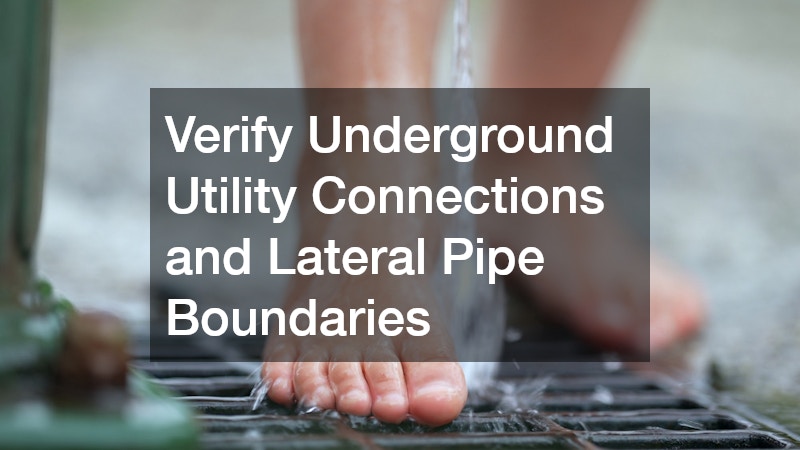
Verify Underground Utility Connections and Lateral Pipe Boundaries
While standard policies protect the systems inside your walls, coverage stops where your home’s foundation meets the earth. Many property owners assume that the underground water, sewer, and gas lines running across their lawns to the municipal main are fully protected, but standard insurance views these buried utilities as the homeowner’s personal maintenance responsibility. If an underground line collapses due to tree root intrusion, soil shifting, or age-related wear, you could face thousands of dollars in unassisted excavation and repair bills just to restore basic utility functions to your household.
To avoid this blind spot, review your policy details and ask your carrier about adding a specific utility line or service line endorsement. This affordable add-on generally covers the costly digging and repair work required when a private external lateral line fails on your property. If an incident occurs and you have this endorsement in place, you can confidently hire a licensed excavating business to trench the yard, swap out the broken pipes, and backfill the earth without destroying your personal budget. Always obtain multiple itemized bids for any major earthmoving or trenching project to ensure the proposed scope of work aligns seamlessly with the maximum caps specified in your utility endorsement.
Minimize On-Site Injury Risks and Understand Legal Defense Parameters
The property damage section of your insurance policy is only half the story; the personal liability portion is what keeps you safe from financial ruin if someone is injured on your property. If a delivery courier slips on an icy walkway, a guest trips over a loose stair railing, or your dog bites a visitor, your liability coverage pays for their medical bills, lost wages, and pain and suffering. Furthermore, this component pays for your legal defense team, covering court fees and attorney billable hours from the moment a formal lawsuit is filed against you, without drawing from your structural repair limits.
To protect your personal wealth, implement an aggressive property maintenance schedule to remove common trip, slip, and fall hazards before they can cause an incident. Keep your sidewalks clear of ice, repair uneven patio stones immediately, and ensure all staircases feature sturdy, code-compliant handrails. If an unfortunate accident does occur on your premises, document the scene thoroughly, gather contact information from any eyewitnesses, and notify your insurance carrier within the same business day. If the injured party decides to hire local injury lawyers to pursue a substantial civil lawsuit against you, your timely reporting ensures your insurance company can step in quickly to manage the defense and protect your personal savings from a catastrophic judgment.
Establish Proactive Maintenance Habits to Prevent Structural Exclusions
A fundamental truth of standard property coverage is that insurance is designed to protect against fortuitous, accidental events, not the predictable outcomes of neglect or skipped maintenance. Issues like slow wood rot, rust, corrosion, and biological infestations develop gradually over time and are viewed by insurance underwriters as the owner’s responsibility to manage. If you ignore a minor maintenance issue for months and it eventually causes a significant structural failure, your insurance company will likely deny the entire claim on the grounds of structural neglect.
- Schedule Professional Roof Inspections: Have a qualified professional inspect your shingles and flashings every spring and autumn to catch wind damage before it turns into an active ceiling leak.
- Clear Drainage Tracks Seasonally: Clean your downspouts and gutters regularly to ensure rainwater flows away from your home rather than pooling against the foundation or backing up under the roofline.
- Monitor Internal Humidity Levels: Keep your basement and crawlspaces well-ventilated and dry to prevent moisture buildup that encourages mold growth and wood rot.
- Track Foundation Shifts: Inspect your basement walls and exterior brickwork for new or widening cracks that could indicate serious structural settling.
To keep your home safe and preserve your insurance eligibility, create a comprehensive home maintenance log where you record the dates and invoices for all professional repairs. If you notice signs of structural chewing, wall void noises, or wood damage, contact a professional pest control company right away to eliminate the issue before it undermines your home’s framing. Because standard policies never cover the extensive repairs associated with termite or rodent damage, investing in regular preventative treatments is the only definitive way to keep these destructive pests from eating away at your home equity.
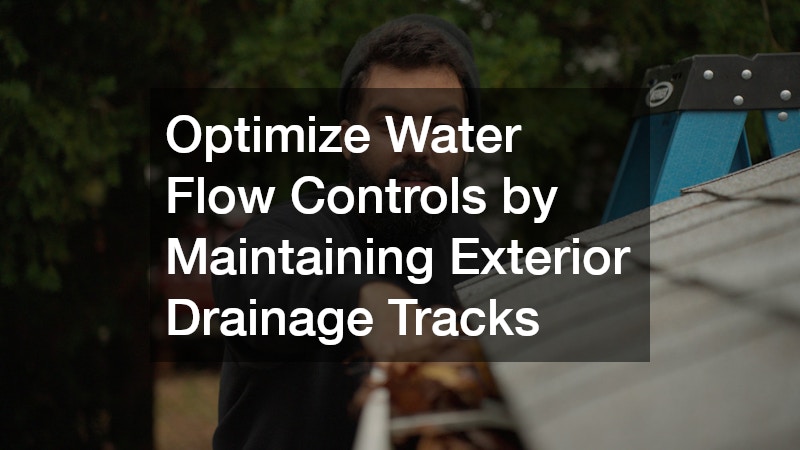
Optimize Water Flow Controls by Maintaining Exterior Drainage Tracks
Your roof and exterior walls serve as the primary shields protecting your living space from nature, but they rely entirely on functional drainage systems to divert water away from the structure. When heavy downpours hit your property, your gutters collect the cascade and funnel it safely away from your siding, windows, and foundation walls. If your drainage systems are clogged with leaves, twigs, and debris, water will inevitably spill over the edges, rot your fascia boards, seep into your soffits, and eventually flood your basement or crawlspace.
To preserve the integrity of your exterior envelope and maintain clear insurance compliance, make a habit of checking your drainage tracks at least twice a year. Consider installing high-quality leaf guards to minimize debris accumulation, and check that your downspout extensions discharge water at least six feet away from your foundation. If you notice sagging tracks, loose brackets, or leaky corner seams, call a local contractor to execute professional gutter repairs before the next major storm season arrives. Documenting these regular upgrades proves to your insurance carrier that you are actively protecting your home, which makes it much easier to resolve claims if an extreme weather event causes sudden storm damage.
Secure Additional Riders for Appraised Fine Jewelry and Collectibles
When you read through the personal property section of your policy, you might be comforted to see a large total coverage limit for your belongings, often set at 50% to 70% of your dwelling limit. However, hidden deep within the policy language are strict sub-limits on high-value luxury categories, such as fine art, firearms, silverware, and high-end jewelry. A standard policy typically caps its payout for the theft or loss of jewelry at a modest $1,500 to $2,500 per incident, which can leave a massive financial gap if you own valuable family heirlooms or custom-designed pieces.
To protect these prized possessions, look into a scheduled personal property endorsement, often referred to in the industry as an insurance rider. This specialized protection requires you to submit a certified itemized appraisal for each piece, but it ensures you will be reimbursed for the item’s true replacement value if it is lost, stolen, or damaged. Taking this step is the best way to secure comprehensive protection for precious family items, including precious metal engagement rings, luxury watches, and rare gemstones. Scheduled items are typically exempt from your standard policy deductible, giving you total peace of mind that your most sentimental assets are fully covered.
Review Structural Finish Choices and Interior Surface Payout Options
The interior finishes of your home—such as your custom cabinetry, painted drywall, and various types of flooring—are fully covered under your dwelling protection if they are damaged by an insured disaster. If a broken appliance line ruins your kitchen or a falling tree punctures your roof and lets rainwater pour inside, your policy will pay to tear out the ruined materials and install matching replacements. However, disputes often arise regarding how far the insurance company must go to match undamaged areas with the newly repaired sections of your home.
When you are managing an interior restoration claim, review your policy’s specific language regarding line-of-sight matching and uniformity rules. Some policies only pay to replace the exact square footage that was physically touched by water or smoke, while others feature endorsements that cover replacing an entire open-concept floor plan to ensure a cohesive look. Work with a certified, licensed flooring service to obtain an itemized estimate that details the costs of material removal, subfloor preparation, and matching installations. Providing your adjuster with a clear, professional breakdown ensures you receive an equitable payout that preserves both the aesthetic appeal and market value of your home.

Maximize Policy Layout Options and Match Your Coverage to Reality
As you learn more about how insurance operates, it becomes clear that a standard policy is not a static document, but a flexible foundation that you can tailor to match your actual lifestyle risks. Every home faces a unique blend of geographic, architectural, and environmental variables, which means a generic, out-of-the-box policy will almost always leave you exposed to uncovered losses. Taking the time to personalize your policy layout transforms your insurance from a basic administrative requirement into a powerful financial safety net.
- Add an Ordinance or Law Endorsement: This vital add-on covers the increased costs of bringing older sections of your home up to current building codes during a major post-disaster rebuild.
- Secure Water Backup Protection: This option protects your wallet if a municipal sewer line or a sump pump fails and sends wastewater into your basement.
- Switch to Personal Property Replacement Cost: Upgrade your contents coverage from Actual Cash Value (ACV) to Replacement Cost Value (RCV), so your claim payouts cover new items at modern retail prices, without factoring in depreciation.
- Incorporate an Inflation Guard Rider: This mechanism automatically adjusts your total dwelling limits to track fluctuations in regional construction and labor costs.
To build the ultimate safety net, treat your homeowners insurance policy as an evolving document that requires regular updates to match your real-world changes. Every time you renovate a room, upgrade your security systems, or purchase high-value items, contact your agent to adjust your coverage parameters accordingly. Taking a hands-on, proactive approach to managing your property policy removes the guesswork from risk management, ensuring that if disaster ever strikes, you can rebuild your home and life with minimal financial stress.
Demystifying your property coverage is an empowering process that replaces anxiety with practical, real-world security. A standard residential policy offers incredible financial protection against sudden, catastrophic events like fires and windstorms, but it demands that you remain an active, responsible partner in maintaining the physical structure. By understanding structural sub-limits, pursuing preventative maintenance, and customizing your coverage with targeted endorsements, you protect your household from unexpected out-of-pocket expenses. Take the time to review your declarations page today, talk openly with your insurance professional, and build a tailored protection plan that keeps your home and family safe for years to come.