Building a successful, highly diversified portfolio of businesses, real estate holdings, and luxury assets is a monumental achievement. It represents years of strategic acquisition, relentless market analysis, and a willingness to step outside your comfort zone to seize new opportunities. However, the evolution of wealth brings with it a corresponding evolution of risk. When you transition from running a single, easily quantifiable enterprise to managing a sprawling portfolio that spans multiple industries, the liabilities you face become exponentially more complex. The standard commercial safeguards that protected your first venture are no longer sufficient to shield an empire.
One of the most dangerous and common mistakes successful entrepreneurs make is assuming that a standard general liability policy, or a slightly expanded umbrella policy, will seamlessly stretch to cover highly specialized businesses or unique investments. In reality, generic policies are riddled with exclusions for niche industries and high-net-worth assets. A single overlooked gap in coverage—whether it is an environmental liability on a piece of coastal real estate, a disrupted supply chain in a retail venture, or a sudden leadership vacuum in a core company—can wipe out years of compounding growth and threaten your entire financial foundation.
The purpose of this comprehensive guide is to fundamentally shift how you view risk management. True wealth preservation requires a proactive, meticulously engineered strategy. By systematically auditing your foundational human capital, shielding your physical commercial developments, defending concentrated high-value inventory, hedging agricultural investments, and properly vetting luxury and philanthropic pursuits, you can build an impenetrable wall around your assets. This roadmap will walk you through the precise steps necessary to identify hidden liabilities and secure the specialized protections that a diverse portfolio demands.
Build a Resilient Human Capital and Wealth Foundation First
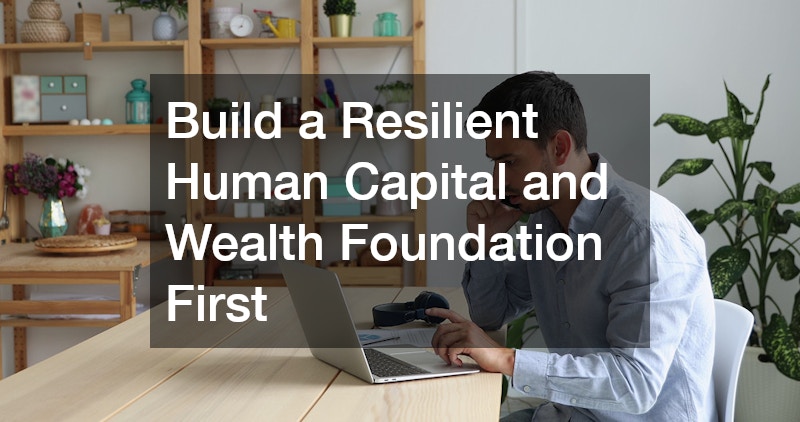
Before you begin analyzing the physical and operational risks of your various commercial properties or luxury assets, you must first audit the very foundation of your empire: the people who run it and the ultimate financial goals driving it. It is remarkably easy to become hyper-focused on protecting the tangible outputs of a business while completely ignoring the human capital that makes those outputs possible. If the executive team managing your diverse portfolio suddenly fractures due to poor retention strategies or sudden illness, the operational stability of your physical assets will rapidly collapse.
Retaining elite talent in a competitive marketplace requires far more than just a lucrative base salary. The managers and executives who oversee your various companies expect an infrastructure that protects their own families and their own futures. Offering comprehensive, premium group health insurance is no longer considered an optional perk or a secondary line item on a profit and loss statement; it is a mandatory foundational tool for risk management. When your key employees know that their physical well-being and that of their dependents are fully secured by a top-tier network, their loyalty and operational focus remain firmly anchored to your organization. This stability prevents the catastrophic knowledge drain and operational downtime that occurs when top-tier talent leaves for a competitor offering better foundational security.
Simultaneously, you must ensure that your corporate risk management strategy is perfectly aligned with your personal, long-term wealth preservation goals. The way you structure the liability protections for your holding companies directly impacts your personal tax burden and your retirement timeline.
To achieve this synchronization, consider the following strategic steps:
-
Establish Key-Person Protections: Identify the absolute most critical individuals across your portfolio whose sudden absence would cause immediate financial harm. Secure specific coverage that injects immediate liquidity into the company to cover the cost of a global executive search and offset lost revenue during the transition period.
-
Coordinate with Wealth Strategists: Do not build your corporate liability shield in a vacuum. It is highly advisable to work in tandem with a seasoned financial planning consultant to ensure that your corporate risk mitigation tactics (such as captive insurance formations or specific trust structures) complement your personal wealth accumulation and estate planning goals.
-
Audit Executive Benefits: Regularly review the supplemental benefits offered to your C-suite leaders. Ensure that long-term disability and deferred compensation plans are robust enough to keep your most valuable human assets heavily incentivized to stay within your portfolio.

Shield Your Heavy Commercial and Real Estate Projects from Liability
As your portfolio expands, you will inevitably acquire, renovate, or construct heavy commercial real estate. Whether you are developing a multi-tenant retail plaza, retrofitting an industrial warehouse, or building a high-rise office complex, the physical environment of construction and property development introduces a staggering amount of liability. The risks of severe physical injury, catastrophic property damage, and crippling project delays are inherent to the building process.
One of the most critical vulnerabilities during any real estate development phase is the reliance on third-party vendors and subcontractors. As the property owner or the primary holding company, you are a prime target for litigation if a subcontractor’s employee is injured on your site or if their negligence causes structural damage to an adjacent property. The legal concept of vicarious liability means that the plaintiff will almost always bypass the underfunded subcontractor and aim their lawsuit directly at the deepest pockets involved in the project—which is you.
To build a firewall between your holding company and the chaotic reality of a construction site, you must strictly enforce vendor compliance. Never allow a subcontractor, architect, or specialized tradesperson to step foot on your property without first providing a verified, active certificate of liability. Furthermore, you must mandate that they carry comprehensive contractor insurance and specifically name your development entity as an “additional insured” on their policy. This critical legal distinction ensures that if their negligence sparks a lawsuit, their policy acts as the primary line of defense, absorbing the legal fees and settlement costs before your own corporate umbrella policy is ever touched.
Navigating the protection of heavy commercial real estate also requires a sophisticated understanding of how the market operates.
-
Builder’s Risk Coverage: Ensure you have a dedicated policy that covers the actual structure while it is under construction, protecting your invested capital from sudden events like fire, severe weather, or vandalism before the building is occupied.
-
Market Diversification: A single carrier will rarely underwrite every phase of a massive commercial portfolio. The entity that insures your stabilized, fully leased office building is likely not the same entity that will underwrite the hazardous ground-up construction of a new industrial facility.
-
Carrier Negotiations: You will find yourself negotiating with several different insurance companies simultaneously, each with its own specific risk appetite and underwriting guidelines. You must leverage the aggregate size of your portfolio to negotiate favorable deductibles and demand customized policy language that addresses the unique geographical and structural realities of your specific real estate assets.
Establish Bulletproof Protection for Concentrated, High-Value Inventory
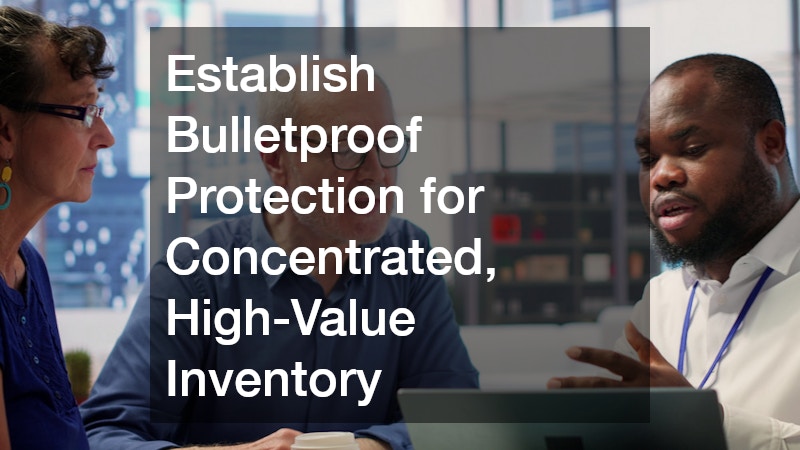
Diversification often leads investors into niche retail or specialized commodities markets. While heavy commercial real estate spreads its value over massive physical footprints, other ventures concentrate astronomical wealth into incredibly small, highly vulnerable spaces. If your portfolio includes investments in luxury watch boutiques, high-end fine jewelry stores, fine art galleries, or precious metal trading firms, you are dealing with a vastly different risk profile. Millions of dollars of inventory can easily be carried out the front door in a single duffel bag.
The unique vulnerabilities of concentrated wealth require specialized underwriting. Standard commercial property policies explicitly exclude or severely cap payouts for the theft of precious stones, high-end watches, or bullion. If your luxury retail location is compromised by a sophisticated burglary or an armed robbery, a generic policy might only offer a few thousand dollars in recovery, leaving your holding company to absorb a multi-million-dollar loss.
To secure this type of concentrated asset, you must prove to the underwriters that you have mitigated the physical risks as much as humanly possible.
Before seeking coverage, implement these strict, verifiable physical security protocols:
-
Advanced Physical Barriers: Install UL-rated, time-locked safes that cannot be opened outside of specific business hours, even under duress. Utilize ballistic-rated, smash-and-grab resistant display glass to slow down potential intruders.
-
Redundant Surveillance: Implement high-definition, off-site camera monitoring systems paired with seismic detectors in the vault room and dual-path alarm transmitters that cannot be defeated by simply cutting a localized phone line.
-
Strict Inventory Protocols: Enforce rigid daily procedures for moving high-value items from the display cases to the vault every single night, ensuring that a minimal amount of inventory is left exposed during non-operational hours.
Only after these protocols are established should you seek out highly specialized jewelers block insurance, which is specifically designed to cover the unique perils of the luxury retail and wholesale trade. This coverage goes beyond standard property damage to protect the inventory while it is on the premises, while it is being transported to a client or a trade show, and even while it is entrusted to a third-party repair facility.
However, obtaining the policy is only the first step; proving the value of the lost inventory after a catastrophic event is where most businesses fail. In the event of a total loss, you cannot simply guess or estimate the value of fluctuating commodities or unique luxury pieces. The burden of proof falls entirely on you. Therefore, your policy must be backed by an up-to-date, rigorous insurance appraisal conducted by an independent, credentialed gemologist or valuation expert. This meticulous documentation guarantees that the underwriter has a pre-agreed, indisputable baseline for the exact replacement value of your inventory, ensuring a swift and full payout when you need it most.

Defend Your Agricultural Yields and Secure Your Family’s Future
Many high-net-worth portfolios incorporate agricultural investments, ranging from operational family farms and sprawling timberlands to commercial vineyards and row-crop acreage. These investments offer excellent diversification, tangible asset backing, and often significant tax advantages. However, unlike a climate-controlled warehouse or a digital tech startup, agribusiness is entirely at the mercy of unpredictable natural forces.
The volatility of the climate makes agricultural investments uniquely precarious. A single, localized event—such as a devastating hailstorm ten days before harvest, a prolonged regional drought, or an unseasonable early freeze—can instantly wipe out an entire year of projected revenue. Furthermore, even if the yield is perfect, sudden shifts in global commodities markets or unexpected supply chain tariffs can cause the actual cash value of that harvest to plummet overnight.
Hedging against this dual threat of weather and market volatility requires specialized agricultural risk management.
-
Yield Protection: Protect your operations against localized natural disasters by ensuring you have coverage that guarantees a payout if your actual physical harvest falls below a historical baseline due to unavoidable weather events.
-
Revenue Protection: Go a step further by utilizing a comprehensive crop insurance plan that not only covers the physical loss of the harvest but also protects against severe, unexpected drops in the market price of the commodity, ensuring your agricultural operations remain cash-flow positive regardless of global market swings.
-
Equipment and Infrastructure: Do not forget to separately insure the massive capital expenditures required to run an agribusiness, such as custom-built harvesters, irrigation pivots, and temperature-controlled storage silos, which are highly susceptible to fire and mechanical breakdown.
Beyond protecting the immediate seasonal revenue of your agricultural and commercial assets, you must look at the ultimate horizon of your portfolio: succession and estate transfer. When the primary owner of a massive, illiquid portfolio passes away, the government will inevitably assess a staggering estate tax. If the family does not have immediate liquid capital to pay this tax, they will be forced into a “fire sale” scenario, liquidating prime real estate, operational farms, or core businesses at a fraction of their true value just to satisfy the IRS.
To prevent the dismantling of your life’s work, you must establish a mechanism that provides instant, tax-free liquidity upon your passing. Creating and funding a robust life insurance plan is the most effective way to guarantee that your heirs have the exact amount of cash required to settle estate taxes and execute cross-purchase agreements with surviving business partners. This ensures that the physical assets, the agricultural lands, and the commercial entities remain entirely intact and continue to generate wealth for the next generation.

Vet Your Luxury Recreational Assets and Protect Philanthropic Interests
The final tier of a highly diversified portfolio often includes luxury recreational assets and deep involvement in philanthropic or community organizations. While these pursuits are the well-deserved rewards of a successful career, they introduce entirely new categories of localized risk and personal liability that must be aggressively managed.
Purchasing luxury marine vessels, for example, is fraught with hidden liabilities. A superyacht is essentially a floating commercial facility, complete with complex electrical grids, heavy propulsion machinery, and a full-time crew. The risks range from catastrophic fires and sudden sinkings to severe environmental liabilities in the event of a massive fuel spill in a protected waterway. Furthermore, under maritime law, you are responsible for the safety and medical care of your crew, exposing you to significant liability if a deckhand is injured while at sea.
You cannot simply purchase a vessel and assume it is safe to insure based on a visual walkthrough. The underwriting process for high-value marine assets is notoriously strict. Before any reputable carrier will agree to bind coverage, you must hire an independent, highly credentialed yacht surveyor to conduct a rigorous out-of-water inspection. This expert will use thermal imaging, moisture meters, and oil analysis to identify hidden structural defects, delaminating fiberglass, or engine wear that the seller may have obscured. Only after the surveyor signs off on the seaworthiness of the vessel can you secure the comprehensive hull, machinery, and protection and indemnity (P&I) coverage required to safely operate the asset.
Similarly, successful entrepreneurs frequently utilize their wealth and expertise to give back by serving on the boards of non-profit organizations, private schools, or local religious institutions. While philanthropic leadership is admirable, it carries severe, often overlooked personal risks. If the organization is sued for mismanagement of funds, discriminatory employment practices, or failure to maintain a safe environment, the plaintiffs will often name the individual board members in the lawsuit, directly targeting your personal wealth.
To shield your personal assets while serving your community, you must take proactive defensive measures:
-
Audit Board Coverage: Before accepting a seat on any non-profit board, demand to see their current Directors & Officers (D&O) liability policy. You must verify that the policy limits are high enough to cover extensive legal defense costs for all board members simultaneously.
-
Verify Specialized Risks: If you are serving a religious institution, the liabilities extend beyond standard financial mismanagement into areas of pastoral counseling liability and specialized property risks. It is highly advisable to consult an experienced church insurance agent to review the institution’s existing policies, ensuring there are no hidden exclusions that could leave the leadership team personally exposed in the event of a localized crisis.
-
Maintain Personal Umbrellas: Even with robust organizational D&O coverage in place, always ensure your own personal umbrella policies specifically extend to cover your actions while serving as an uncompensated fiduciary on an outside board.
Conclusion
Navigating the risk management of a highly diverse, multi-tiered portfolio is not a task that can be delegated and forgotten. As your wealth expands across new industries, new geographies, and new asset classes, your defensive strategies must evolve in tandem. Relying on generic commercial policies or outdated coverage limits is a gamble that no successful entrepreneur can afford to take. True wealth management is not defined solely by aggressive acquisition and compounding returns; it is ultimately defined by meticulous, calculated preservation.
By taking a holistic view of your empire, you can systematically close the gaps that threaten your legacy. Start by fortifying your human capital to ensure operational stability. Aggressively shield your physical real estate developments from third-party negligence, and lock down your highly concentrated, liquid inventory with specialized underwriting. Protect your agricultural investments against the unpredictability of nature, and rigorously vet your luxury marine assets before they ever hit the water. Finally, ensure that your philanthropic endeavors do not inadvertently expose your personal wealth to unnecessary litigation.
The landscape of liability is constantly shifting, and a policy that offered adequate protection three years ago may leave you dangerously exposed today. Do not wait for a catastrophic loss or a sudden lawsuit to test the strength of your corporate shield. Take immediate, proactive action. Schedule a comprehensive, cross-policy review with your entire risk management and legal team this quarter to identify overlapping exposures, update your appraisals, and guarantee that the empire you have spent a lifetime building remains impenetrable for generations to come.